 Historical Figure MBTI
#1025 · 7-30-26 · The Second World War
Robert H. Jackson
The Justice Who Left the Bench · Chief Prosecutor at Nuremberg · Inventing a Trial
1892 — 1954
9 min read
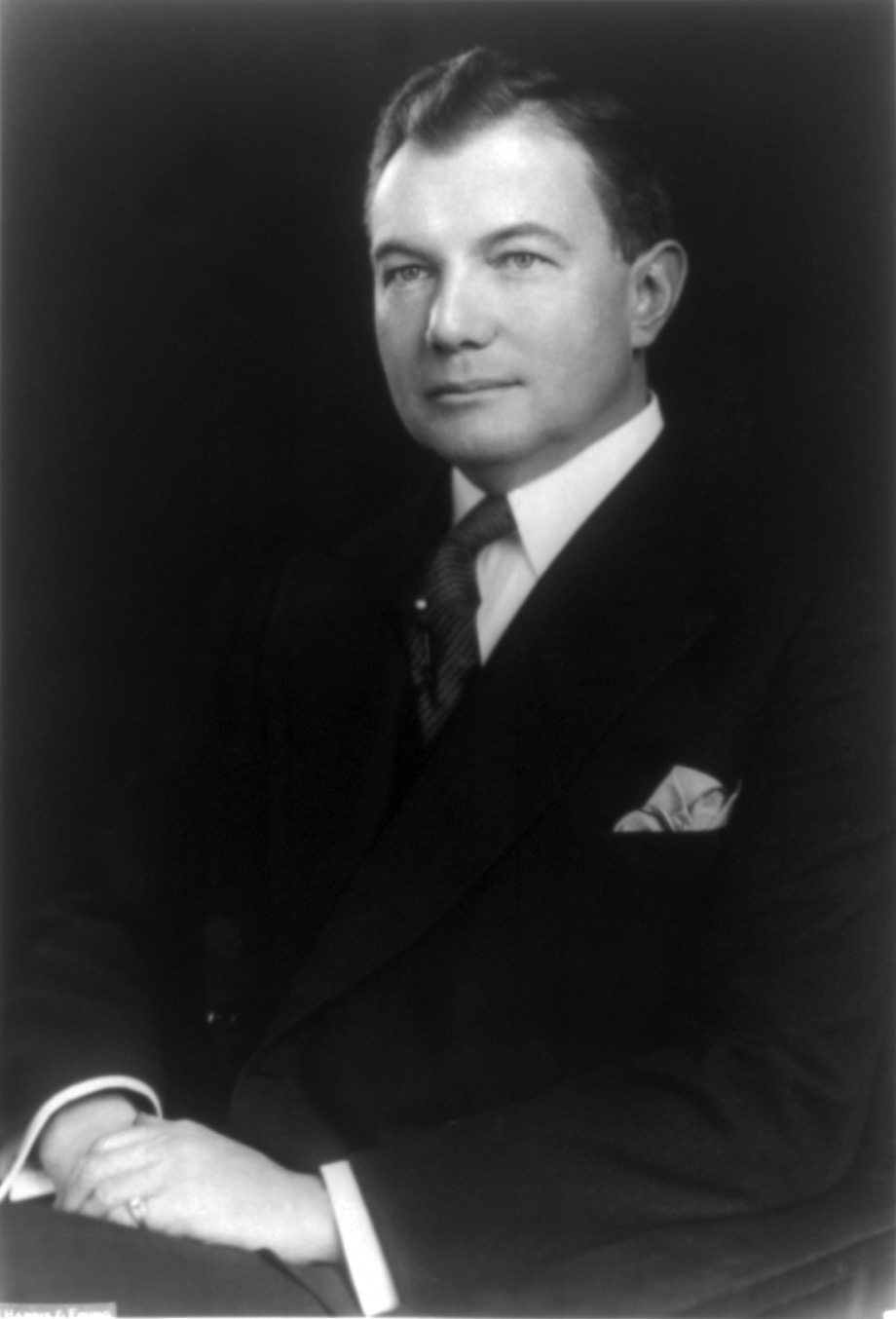
Portrait of Robert H. Jackson
The Man Who Built a Courtroom Where There Was None
In the spring of 1945 the victorious Allies faced a question with no settled answer: what to do with the men who had run the Third Reich. Churchill favored shooting the leadership on identification. Stalin, at Tehran, had proposed executing fifty thousand German officers and then insisted he was joking. The tidy solution — a list, a wall, a firing squad — had the advantage of requiring nothing that did not already exist. Robert Houghwout Jackson, a self-taught country lawyer from Jamestown, New York, who had risen to Attorney General and then to the Supreme Court, argued for the harder thing. He wanted a trial: not a ceremony of vengeance dressed in robes, but a proceeding with a record, an evidentiary standard, and a defense — because only that would leave behind something a later century could not deny.
Having won the argument, he did the thing that defines him. He took leave of a lifetime appointment on the highest court in his country and went to Germany to do the work himself. He had no statute, no court, no precedent, and no body of law making a head of state answerable for launching a war. He and his staff built all of it in roughly four months — the London Charter that created the tribunal, the four-count indictment, the decision to prove the case out of the Germans' own documents rather than survivor testimony a defense could contest. Then he stood on 21 November 1945 and opened with a sentence that has outlived nearly everything else said in that room: the wrongs he sought to condemn and punish had been so calculated, so malignant, and so devastating that civilization could not tolerate their being ignored. It is engineering as much as rhetoric — a man who met a chaos of atrocity by asking, first, what institution could hold it.
Jackson is the archive's cleanest study in dominant Te: an ENTJ who met an unprecedented moral catastrophe by asking not what should be felt about it but what structure could contain it — and then built that structure, from nothing, in four months.
The Case Assembled Like a Machine
Extraverted Thinking is the drive to impose order on the external world — to organize, systematize, and get a working result rather than a satisfying idea. Jackson's most consequential decision at Nuremberg was procedural and came from exactly there. He built the prosecution almost entirely on captured German documents: orders, minutes, memoranda, ledgers, the paper trail of a bureaucracy that had recorded its own crimes with fastidious care. Emotionally this was the weaker choice — survivor testimony would have shattered the courtroom. Jackson wanted a record that could not be dismissed in twenty years as the hysteria of the wronged, and so he made the Reich convict itself out of its own filing cabinets.
The same instinct shows in how he treated the tribunal as a thing to be constructed. At the London Conference in the summer of 1945 he negotiated with British, French, and Soviet delegations sharing neither a legal tradition nor, in the Soviet case, an assumption that guilt remained open at the start of a trial. Jackson pushed through a charter defining crimes against peace, war crimes, and crimes against humanity, and pushed equally hard for the adversarial features — cross-examination, defense counsel, a written record — on which the enterprise's legitimacy depended.
Te also explains his failures. His cross-examination of Göring began badly: Jackson came in with a document-driven line of questioning and met a defendant who answered expansively, turned questions into speeches, and drew laughter from the gallery. A more improvisational prosecutor would have adjusted. Jackson pressed his structure, lost his temper, and appealed to the bench. He recovered — later sessions pinned Göring on the Reichstag Fire decree, on the looting of occupied economies, on the fate of Jewish property — but his power was in the architecture, not the duel.
Writing Law for a Century He Would Not See
Introverted Intuition keeps ENTJ ambition from being merely managerial: it converges on a single distant implication and organizes present action around it. Jackson's clearest statement of it is his admission, in the opening address, that the tribunal was passing a poisoned chalice to its own lips — that the standards applied to the defendants would, if the enterprise was honest, be applied to the victors too. That is not a prosecutor's line. It is the sentence of a man arguing about the year 2000 while standing in the rubble of 1945.
He understood, as few contemporaries did, that what mattered was not the fate of twenty-two men who were going to be convicted under any procedure anyone might devise, but whether a durable principle came out of the room. The choice to charge crimes against humanity — offenses a state commits against its own civilians, in its own territory — was the riskiest count in the indictment and the one with least precedent behind it. It is also the one that seeded the Genocide Convention, the tribunals for Yugoslavia and Rwanda, and eventually the International Criminal Court. Jackson was not applying a body of law; he was writing one and disguising it as discovery. The same convergence explains his willingness to lose battles for the shape of the whole — accepting three acquittals, because a tribunal that convicted everyone would be recognized as theater, and accepting a Soviet judge adjudicating aggressive war, because a four-power court was the only court that could exist.
The Room, the Reels, the Physical Fact
Tertiary Extraverted Sensing in an ENTJ shows up as a feel for the concrete gesture — the moment, the object, the staging that lands a point in a body rather than a mind. Jackson had it, and used it with a showman's precision. The prosecution's most notorious hour was the screening of Nazi Concentration Camps, the Allied film of Ohrdruf, Buchenwald, Dachau and Bergen-Belsen, shown in the courtroom on 29 November 1945. Jackson had the house lights dimmed but ordered small lamps trained on the dock, so that the tribunal, the press, and the world could watch the defendants watch. Schacht turned away. Frank wept. Göring, later, complained that the film had ruined his good afternoon in court.
He had the courtroom itself rebuilt, too: a screen for evidence, a wired simultaneous-translation system — a genuine novelty in 1945 — and a press gallery large enough that the trial could not happen quietly. He wanted the proceeding seen, and he thought hard about the mechanics of seeing.
Se in the tertiary slot is also where impulse leaks in. Jackson could be combative in ways that served no strategy — the flashes of temper with Göring, and the extraordinary public broadside he fired from Nuremberg at Justice Hugo Black in 1946, a feud conducted in the newspapers and never lived down. The appetite for direct confrontation that made him formidable in a hearing room made him reckless outside it.
The Private Conviction Under the Architecture
Inferior Introverted Feeling in an ENTJ is not absent; it is compressed, rarely spoken, and enormously load-bearing when it surfaces. Jackson's surfaced twice in ways that shaped American life. The first was West Virginia State Board of Education v. Barnette (1943), in which he wrote for the Court that no official, high or petty, may prescribe what shall be orthodox in politics, nationalism, or religion, or force citizens to confess by word or act their faith therein. It is a statement of individual conscience against the state, written in the middle of a war, by a Justice whose ordinary mode was institutional.
The second was Nuremberg itself. Jackson did not have to go. He gave up a term on the Supreme Court, drew the resentment of colleagues who carried his docket, and very likely cost himself the Chief Justiceship — Truman passed him over in 1946, in part because of the Black feud his absence had inflamed. He went because he believed something specific and personal about what law was for, and was willing to spend his career on it. That is Fi doing what inferior Fi does: staying silent for decades, then dictating one irrevocable decision. He was not sentimental about the men he prosecuted. He simply declined to let hatred write the record.
Why ENTJ Over ESTJ
Why not ESTJ?
An ESTJ leads with the same commanding Te but pairs it with Introverted Sensing — the authority of established practice, applied with rigor to a new case. That is not what Jackson did, because there was no established practice to apply. International law in 1945 had no mechanism for trying a state's leadership for planning aggressive war, and no category at all for a government's industrial murder of its own civilians. Jackson invented the charge, the court, and the jurisdiction, then defended the invention against the fair objection that he was punishing men under law written after the act. An Si-driven prosecutor would have found that ground unbearable and retreated to what precedent allowed. Jackson's move was Ni: convergence on a principle that did not yet exist in positive law, pursued because he could see where it would matter.
The distinction is the whole of his significance. Any competent Te-dominant lawyer could have run the mechanics of a large trial. What separated Jackson was that he treated the absence of precedent as an opportunity to write one, and understood that the writing was the point — telling the tribunal outright that the four nations were staking their own future conduct on the standard they were about to declare. That is a Ni argument made in a Te register, by a man building the twenty-first century's law out of the twentieth's worst year.
Connected Figures
Further Reading
- Opening and Closing Statements Before the International Military Tribunal — Robert H. JacksonThe primary documents. The opening address of 21 November 1945 is the founding text of modern international criminal law; read it alongside the closing to see the architecture entire.
- The Anatomy of the Nuremberg Trials: A Personal Memoir — Telford TaylorBy Jackson's successor as chief counsel — the indispensable insider account of how the charter, the indictment, and the trial were actually assembled.
- That Man: An Insider's Portrait of Franklin D. Roosevelt — Robert H. Jackson (ed. John Q. Barrett)Jackson's own unpublished memoir of the New Deal years, recovered and edited by his leading modern scholar.
- The Jackson List and essays on Robert H. Jackson — John Q. BarrettThe standing body of documentary scholarship on Jackson's career, correspondence, and the Nuremberg year.
- Trial of the Major War Criminals Before the International Military Tribunal (the 'Blue Series') — International Military TribunalThe complete forty-two-volume record, including the Göring cross-examination in full.
