 Historical Figure MBTI
#553 · 4-27-26 · The Age of Saladin
al-Adil
Sultan of Egypt · Brother of Saladin · The Pragmatic Diplomat
1145 — 1218
8 min read
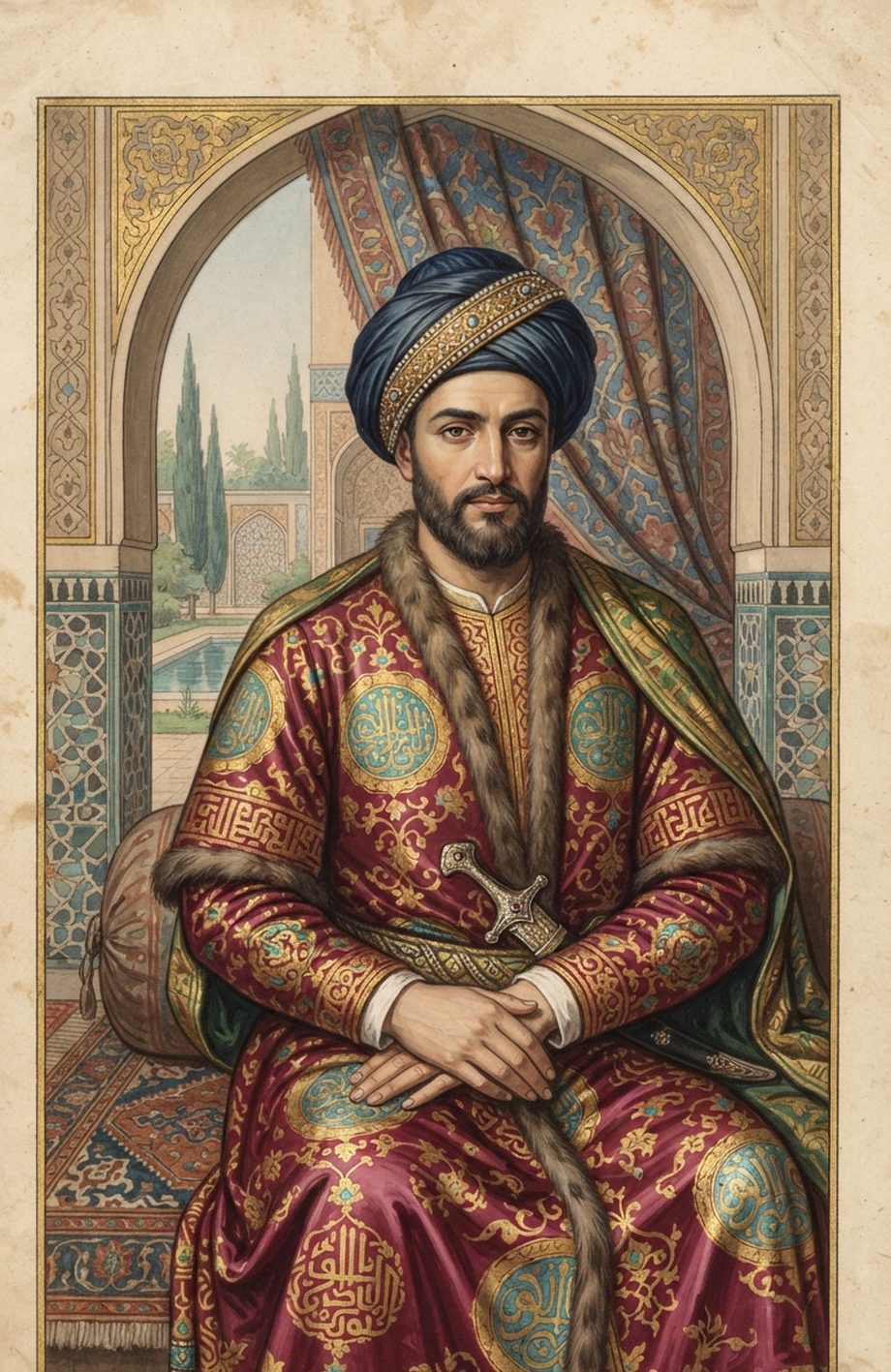
AI-assisted Portrait of al-Adil
The Brother Behind the Throne
History remembers the warm one. Saladin—the chivalrous sultan who took Jerusalem and spared its people, the enemy Richard the Lionheart could almost admire—is one of the few medieval Muslim rulers a Western schoolchild can name. Almost no one remembers the cold one. Yet without his younger brother, the empire Saladin conquered by moral charisma would have died with him inside a decade. al-Adil Sayf al-Din, whom the Crusaders called Saphadin, was the man who governed the provinces while Saladin won the glory—and the man who, when Saladin's heirs began tearing the realm apart, quietly gathered it back into a single fist and sat down on the throne himself.
He was born in 1145 and spent his prime as the indispensable, unglamorous manager of his brother's conquests: administering Egypt, holding provinces, raising revenue, and—during the Third Crusade—serving as Saladin's chief negotiator with Richard the Lionheart. When Saladin died in 1193 and the Ayyubid lands fragmented among his quarreling sons, al-Adil did not seize power in a single dramatic stroke. He waited. He played the nephews against one another, backed the winning side, absorbed the losers, and by 1200 had reunited the whole empire under his own name. Where Saladin was a conqueror, al-Adil was a consolidator—the pragmatic realist without whom the idealist's work would have been undone.
al-Adil is the INTJ as the power behind the throne: Ni's long, patient reading of an endgame no one else could see, welded to Te's cold competence at governing, negotiating, and reorganizing a realm. He did not conquer an empire. He kept one from dissolving.
The Man Who Could See the End
Ni — dominant
Dominant Ni holds a single, fixed picture of how things will end and bends every present move toward it, even when the present looks like defeat. al-Adil's whole life is legible only through that lens. In 1193, with Saladin barely cold, the Ayyubid realm looked less like an empire than a scramble—a knot of sons and nephews each grasping for Egypt, Damascus, Aleppo. To the men inside it, the future was a fog of rival claims. al-Adil seems to have seen through the fog to the one outcome that mattered: that a divided dynasty would be devoured, and that whoever could reassemble it first would inherit everything.
So he played the long game. He did not overreach early, when overreaching would have united the others against him. He took the role of kingmaker and elder statesman, lending his weight to one nephew against another, letting rivalries exhaust themselves, and stepping in only when a prize had already been softened. Contemporaries who watched him move could see the maneuvers but not the design; each act looked like loyal service or opportune alliance. Only in 1200, when the pieces had all fallen into his hand and he took the sultanate for himself, was the shape of the plan visible in hindsight. That is the Ni signature—a strategy so patient that it is invisible until it is complete.
The same foresight had shown years earlier in his diplomacy. During the Third Crusade he grasped, as the zealots on neither side would, that the war could not be won outright and would have to be ended by arrangement—which is why he became the indispensable channel between Saladin and Richard. He was already thinking past the battle to the settlement, past the glory to the durable result.
The Administrator's Empire
Te — auxiliary
If Ni gave al-Adil the vision, auxiliary Te gave him the tools to build it—the machinery of governance, revenue, and negotiation. This was his lifelong trade. While Saladin campaigned, al-Adil ran things: he governed Egypt and other provinces as his brother's deputy, and it was famously his competent administration of the Egyptian revenues that underwrote the conquests everyone else remembers. Saladin supplied the moral fire; al-Adil supplied the money, the grain, and the working bureaucracy that turned fire into an army. It is the classic division of an idealist and the operator who makes the ideal solvent.
Te shows most clearly in how he reunified the realm after 1193—not by battlefield charisma but by hard reorganization. He redrew the map of who held what, installed his own sons in the key provinces, and rebuilt a fractured confederation into a governable structure with himself at its head. Where Saladin had ruled a loose alliance held together by his own prestige, al-Adil left behind a system that could be administered. He was building an institution, not a personal following—the difference between a conqueror's empire and a dynasty's state.
And Te is the whole grammar of his diplomacy. As Saladin's negotiator with Richard, he treated the war as a problem to be closed on the best available terms rather than a crusade to be won on principle. He bargained, conceded, and sought the efficient exit—the mind of a man for whom a signed truce that holds is worth more than a righteous victory that doesn't.
The Loyalty That Preceded the Ambition
Fi — tertiary
Tertiary Fi is a quiet, private core of conviction that the strategic mind rarely puts on display. In al-Adil it reads as an unshowy loyalty to blood and dynasty that came before any personal grasping. For decades he served Saladin without visible resentment at being the lesser-remembered brother, content to hold the provinces and do the unglamorous work while another man wore the legend. There is no record of him intriguing against Saladin in life—the ambition, when it came, came only after his brother was gone and the inheritance was being squandered.
That timing matters, because it complicates the easy reading of a cold usurper. When al-Adil finally took the throne from Saladin's sons, it can be told as betrayal; but it can as easily be told as a man who could not bear to watch his brother's life-work dissolve into the squabbling of unworthy heirs. The Fi conviction was not loud, and it did not announce itself in speeches—but it seems genuinely to have been the preservation of the family's achievement, not mere appetite for a crown.
Being tertiary, this feeling never governed him; it sat beneath the calculation, giving it a direction. The result is the characteristic INTJ opacity—a man whose inner loyalties were real but almost never performed, so that even those closest to him were left to guess whether the patient brother was a servant or a rival all along.
The Marriage That Would Have Ended a War
Se — inferior
Inferior Se is the INTJ's weakest and strangest register—the impulse toward a bold, concrete gesture in the immediate world, which in a Ni-dominant mind tends to arrive not as brute physical daring but as a single audacious stroke that cuts through a deadlock. al-Adil's came in 1191, in the middle of the Third Crusade, and it remains one of the most astonishing proposals in medieval diplomacy: that he should marry Joan of England, Richard's own sister, with Jerusalem itself settled on the couple as their joint dower—Muslim and Christian ruling the holy city together as man and wife, and the war simply dissolved by a wedding.
It is a spectacularly concrete solution to an abstract, intractable problem—the kind of lateral, tangible move that slices through years of stalemate at a stroke. Whether al-Adil meant it in earnest or floated it as a feint to test Richard and buy time (the scheme collapsed, and may have been theater on both sides), it is unmistakably the mark of a mind willing to reach for the outrageous single gesture when the patient game had stalled. That is inferior Se: not al-Adil's native mode, but the flash of bold, worldly improvisation an INTJ produces when the long strategy needs a shock.
Tellingly, it is the exception, not the rule. al-Adil was no front-line hero charging at the head of an army; his whole career was made in the council chamber and the counting-house, not the melee. The Joan proposal stands out precisely because the sudden, sensational move was so unlike him—the inferior function surfacing once, brilliantly, and then submerging again beneath the patient work.
Why INTJ Over ENTJ
Why not ENTJ?
The ENTJ case is tempting—al-Adil administered a realm, reorganized a dynasty, and drove hard toward power, all of which look like commanding Te. But the ENTJ is a front-of-house driver: a public, charismatic force of will who seizes control openly and leads from the front. al-Adil did none of that. He was the behind-the-scenes operator—governing provinces in another man's name, negotiating quietly, and outlasting his rivals through patience and concealed calculation rather than overt force of personality. His Te was the instrument of his strategy, not the engine of his character. The gathering-in of the empire was so gradual and so hidden that no one saw the design until it was finished, which is Ni running the show and Te serving it—not the other way around.
The two brothers make the cleanest possible contrast. If either Ayyubid was the loud, charismatic driver, it was Saladin—the warm idealist who led from the front and won men by force of moral presence. al-Adil was his opposite and his complement: the cool realist who worked in the quiet, preferred the arrangement to the battle, and measured himself by the durable result rather than the public acclaim. An ENTJ wants to be seen holding the reins. al-Adil was content to let his brother be seen—so long as, in the end, the reins were his.
Connected Figures
Further Reading
- From Saladin to the Mongols: The Ayyubids of Damascus, 1193–1260 — R. Stephen HumphreysThe definitive account of the Ayyubid succession crisis and al-Adil's reconsolidation of the empire — the essential scholarly work on his reign.
- Saladin — Anne-Marie EddéThe major modern biography of Saladin, rich on the court and family al-Adil served within and the politics of the dynasty.
- Saladin: The Politics of the Holy War — Malcolm Cameron Lyons & D. E. P. JacksonA meticulous study of Saladin's statecraft and campaigns, illuminating al-Adil's role as administrator and diplomat throughout.
- The Crusades: The Authoritative History of the War for the Holy Land — Thomas AsbridgeA vivid narrative of the Third Crusade and its diplomacy, including al-Adil's negotiations with Richard and the Joan of England marriage scheme.
