 Historical Figure MBTI
#551 · 4-27-26 · The Age of Saladin
Saladin
Sultan of Egypt and Syria · Conqueror of Jerusalem · The Chivalrous Unifier
1137 — 1193
11 min read
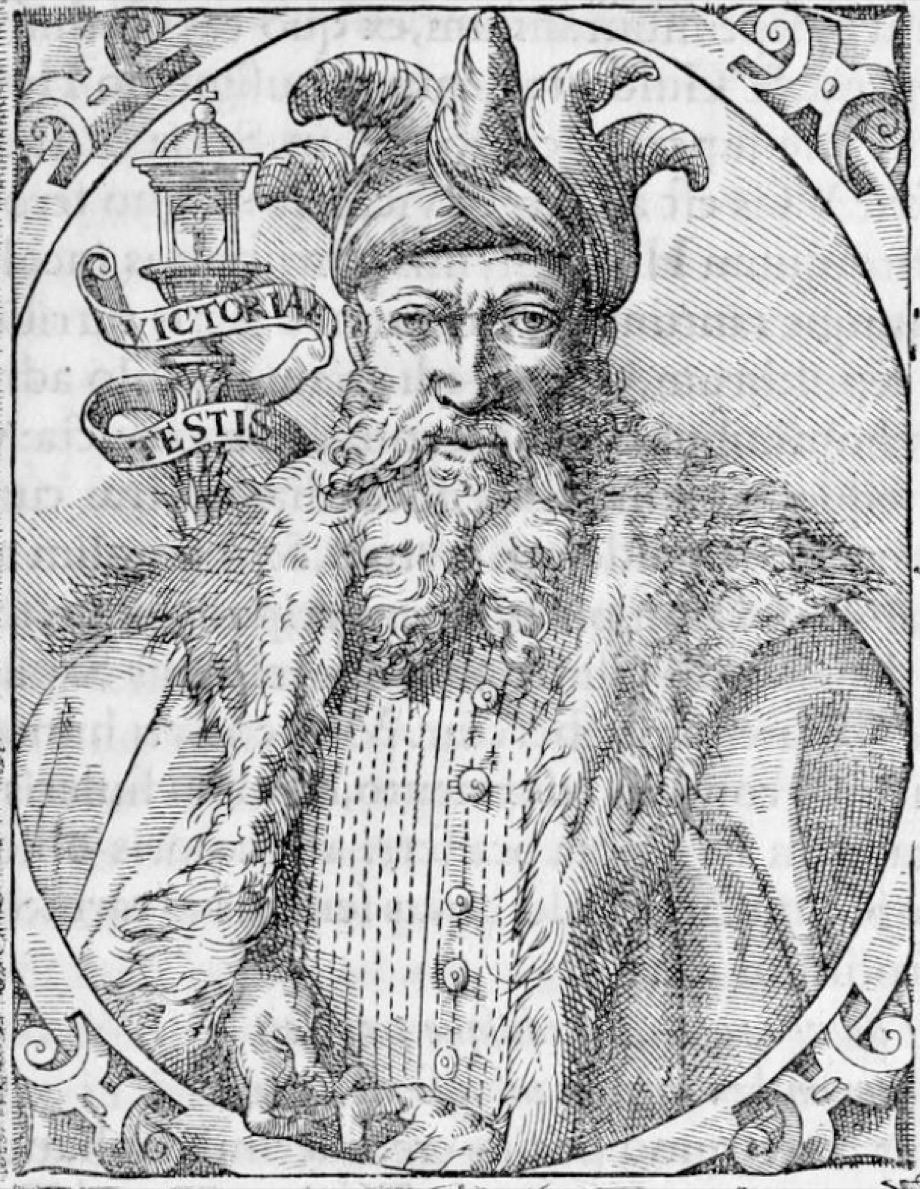
Portrait of Saladin
The King Who Ruled by Being Loved
He was a Kurd in a world that belonged to Arabs and Turks — an outsider by birth, born in Tikrit in 1137 to a family of soldiers who served other men's ambitions. He was not, by the honest testimony of the century, a great battlefield tactician: a sixteen-year-old dying of leprosy, Baldwin IV, routed him at Montgisard in 1177, and he lost more engagements than the legend admits. And yet within a generation this unglamorous outsider had made himself the most beloved sovereign in the medieval world, revered by the Muslims he unified and honored even by the Christians he fought. He did it with a single, almost unmilitary weapon: his character. Where other conquerors took by terror, Salah ad-Din Yusuf ibn Ayyub took by being trusted — by embodying, more completely than any rival, the values every fractious emir already claimed to hold.
The bare career is staggering. Sent to Egypt as a subordinate, he became vizier and in 1171 quietly abolished the Shia Fatimid Caliphate, returning the richest land in the region to Sunni orthodoxy and to himself. The death of his patron Nur ad-Din in 1174 let him weld Egypt and Syria into one realm and found the Ayyubid dynasty. Then came the patient decade of marriage, diplomacy, and war by which he made himself the embodiment of jihad — and, in July 1187, the annihilation of the Crusader army at the Horns of Hattin, the capture of the True Cross, and the retaking of Jerusalem after eighty-eight years of Frankish rule. That fall summoned the Third Crusade and Richard the Lionheart; the two men dueled up and down the Palestinian coast for three years, admired each other extravagantly, and never once met. When Saladin died in Damascus in 1193, having given his fortune away by the fistful his whole life, his treasury could not cover the cost of his grave.
Saladin is the ENFJ as sovereign: dominant Fe that ruled through people, honor, and shared values rather than cold force, guided by an Ni vision held unwavering for a decade — a united Islam and a reclaimed Jerusalem. His magnanimity was not policy but compulsion, and it cost him constantly. He won by being loved.
It is the rarest kind of greatness, and the hardest to type, because it looks from the outside like softness. Saladin freed enemies who promptly rejoined the fight against him. He refused massacres that would have made his conquests permanent. He wept, forgave, and gave until he was poor. Read as weakness, none of it makes sense. Read as the ENFJ's dominant Fe — the conviction that a man's standing in the eyes of others is the ground of all real power — it was the most coherent strategy of the age.
The Weapon of Mercy
Fe — dominant
Dominant Fe reads the shared emotional and moral field of a group and moves people by embodying the values they already honor. Saladin's great achievement was not a battle but a unification, and unification was a problem of feeling, not force. The Muslim Near East he inherited was a snake-pit of jealous emirs, each guarding his own city and title, none willing to bleed for another man's glory. Saladin bound them together not by conquering them — though he fought several — but by becoming the one figure they could all follow without shame: the visible embodiment of piety and jihad, a leader whose cause was so plainly larger than himself that to refuse him was to refuse Islam. He built that persona deliberately and relentlessly, and it did the work ten armies could not.
His mercy was the sharpest edge of that weapon, and Jerusalem is the proof. When the Crusaders had taken the city in 1099 they had waded through a massacre; when Saladin took it back in October 1187 he did the opposite, and knew exactly what he was doing. He set the ransoms low, let the Christians depart in safety, and when the poor could not pay he covered their ransoms from his own purse, his brother al-Adil and his officers begging free thousands more. It was, in the coldest terms, a catastrophe of lost revenue and lost leverage. As Fe it was a masterstroke: the story of the merciful conqueror ran through every court in Europe and every mosque in Islam, and made him a legend on both sides of a religious war. Dante would place him among the virtuous pagans in Limbo; his own people would remember no sultan more warmly. He understood that reputation was the one asset that compounded.
And it flowed from something real, which is why it worked. His biographer Baha ad-Din ibn Shaddad, who sat with him for years, recorded a man who could not keep his money, who was undone by the sight of a weeping mother, who treated the humblest petitioner with grave courtesy. Fe of this order is not performance laid over a cold interior; it is the interior. Saladin genuinely felt the pull of every face in front of him — and because the feeling was true, the persona built on it never cracked. That is what his rivals could never counterfeit and never match.
One Idea, Held for Ten Years
Ni — auxiliary
Auxiliary Ni gave the warmth its spine: a single convergent vision of the future that never wavered across a decade of setbacks. Saladin's vision was simple to state and brutally hard to reach — a Muslim Near East united under one authority, and Jerusalem restored to Islam. Everything between 1174 and 1187 was subordinated to it. He did not lunge at the Crusader kingdom the moment he held Egypt; he understood that the Franks could not be beaten until the Muslims behind him were one. So he spent years turning inward first, reducing Aleppo and Mosul and the lesser lords of Syria by siege, marriage, and negotiation, absorbing the very cause of holy war he had inherited from Nur ad-Din and making it unmistakably his own. It was the patient sequencing of a man who could see the whole shape of the thing and refused to grab the near prize before the far one was possible.
The self-cultivation was Ni as much as the strategy. Saladin worked for a decade to become, in the eyes of the whole Muslim world, the singular embodiment of jihad — not because vanity demanded it but because his vision required a symbol at its center, and he intended to be that symbol. He let the idea of himself do political work that armies could not: emirs who would never have submitted to a rival warlord could submit to the champion of the faith. This is the quiet genius of Ni–Fe together — a vision of the end held with total clarity, pursued through the medium of how people feel and what they revere.
Hattin and Jerusalem were not improvisations; they were the harvest of that long foresight. By the time he brought the united host of Islam into the field in 1187, the decade of unification had already won the war — the battle only cashed it in. An impulsive man strikes at Jerusalem in 1175 and is destroyed. Saladin waited twelve years for the one campaign in which the whole of his design finally stood ready, and then he did not miss.
Hattin, and the Reading of the Ground
Se — tertiary
Tertiary Se let the visionary act in the physical here-and-now — to read terrain, thirst, and timing, and to strike hard when the moment opened. Hattin is the clearest case. Saladin, no master of open tactics, won the decisive battle of his life not by maneuver-genius but by feeling the ground and the July heat with a hunter's immediacy. He lured the Crusader army out from its water into the waterless hills, cut it off from the springs, set the dry grass alight so the smoke choked the parched knights, and let the sun and the thirst do to their heavy column what his cavalry could then finish. It was a victory of physical circumstance seized at exactly the right hour — Se in the service of a design long since fixed.
He led from within the reality of the field, not from a tent behind it. Baha ad-Din watched him ride the line at Hattin and later along the coast during the Third Crusade, present in the dust and the danger, rallying men by being visibly among them. The chivalry that so astonished the Franks was Se and Fe fused: when Richard lay sick at Jaffa, Saladin sent fresh fruit and snow packed down from the mountains to cool his fever, and dispatched horses to a king unhorsed in battle — concrete, tangible gestures of honor, offered in the flesh of the moment rather than declared in words.
Se, though, was tertiary, not the engine, and that boundary defines him against his enemies. The full-throttle Se belonged to men like Reynald of Châtillon and Richard — sensation-hungry, magnificent in the immediate fight, forever reaching for the next raid or charge. Saladin could match their nerve when he had to, but his boldness was always harnessed to the long vision and the wider audience. He seized the present because the future and the reputation demanded it, never merely for the thrill of the seizing.
The Ledger He Could Not Keep
Ti — inferior
Inferior Ti is the ENFJ's weakest register: cold, impersonal, results-only calculation — the arithmetic of advantage pursued without regard for who is watching or what is honorable. In Saladin it was chronically underpowered, and it cost him again and again. He could not do the ruthless sum. At Hattin he captured Guy of Lusignan, the weak Crusader king, and spared him — and Guy went on to help lead the siege of Acre against him. Time after time he ransomed, released, or paroled captured knights on their word, and time after time they broke it and returned to the field. A colder mind would have kept them, or killed them, and slept well. Saladin's honor overrode the ledger every time.
The one exception proves how the machine actually ran. The single captive he refused to spare was Reynald of Châtillon — the brigand who had plundered pilgrim caravans under truce and menaced Mecca itself. Saladin executed him personally after Hattin, and the reason was not strategic but moral: Reynald had violated the sacred order Saladin embodied. He killed for a broken oath and an insulted faith, and spared the king standing beside him — the reverse of what cold Ti calculation would advise. Feeling and honor set the sentence in both cases; impersonal logic set neither.
The final accounting is the deathbed. Saladin died in 1193 having given so much of his wealth away, in charity and largesse and the ransoming of the poor, that his treasury held too little to pay for his own grave. To an INTJ or an ENTJ that is simple mismanagement; to the ENFJ it is the signature carried to its end. He never mastered the discipline of keeping — of treating money, mercy, and enemies as pieces on a board to be conserved. The very inability that beggared him was inseparable from the warmth that made him beloved. The weakness and the greatness were one function seen from two sides.
Why ENFJ Over INFJ or INTJ
Why not INFJ?
The idealism and the moral vision tempt an INFJ reading, and Saladin shares the type's fixed inner picture of the future. But the INFJ leads with Ni — a withdrawn, singular vision worked out in private and often carried against the crowd. Saladin was fundamentally outward: a public unifier who governed the emotional field of a whole civilization, who drew his power from being seen, revered, and loved by the people in front of him. His dominant function faces the group, not the inner deep. He was a lodestar, not a mystic — Fe-dom, not Ni-dom.
Why not INTJ?
His shrewd younger brother al-Adil was the true INTJ of the family — the cold, pragmatic strategist who would have kept Guy in a cell and never paid a poor man's ransom. Saladin was the opposite. An INTJ's Te would never release enemies out of magnanimity, never bankrupt itself in charity, never let honor override the calculus of advantage. Yet Saladin freed foes who rejoined the war and died too poor to buy his grave. Mercy and reputation beat cold arithmetic in him every single time — the exact inversion of the INTJ.
What settles it is the direction of the power and the price he paid for it. The introverted types — INFJ, INTJ — generate their force from within and spend it on the world; Saladin generated his force from the world — from loyalty, honor, and the shared values he embodied — and could not stop pouring it back out until there was nothing left to give. That is a way of holding power no withdrawn visionary could sustain, and no cold calculator would ever choose.
Connected Figures
Further Reading
- Saladin — Anne-Marie EddéThe major modern scholarly biography — the fullest and most authoritative account of the man, his world, and the sources.
- The Life and Legend of the Sultan Saladin — Jonathan PhillipsA rich modern narrative that traces both the historical Saladin and the extraordinary afterlife of his reputation, East and West.
- The Rare and Excellent History of Saladin — Baha ad-Din ibn Shaddad (trans. D. S. Richards)The intimate eyewitness biography by the man who knew him best — the primary source for his piety, generosity, and humanity.
- Saladin: The Politics of the Holy War — Malcolm Cameron Lyons & D. E. P. JacksonThe rigorous scholarly reconstruction of his political and military career, exacting on the realities behind the legend.
- The Crusades: Islamic Perspectives — Carole HillenbrandIndispensable for seeing Saladin and the wars from the Muslim side, on its own terms rather than through Crusader chronicles.
- The Crusades: The Authoritative History — Thomas AsbridgeThe best single-volume narrative of the whole struggle — vivid on Hattin, Jerusalem, and the Saladin–Richard duel.
