 Historical Figure MBTI
#563 · 4-28-26 · The Age of Saladin
Joan of England
Queen of Sicily · Sister of Richard · The Proposed Bride of the Peace
1165 — 1199
6 min read
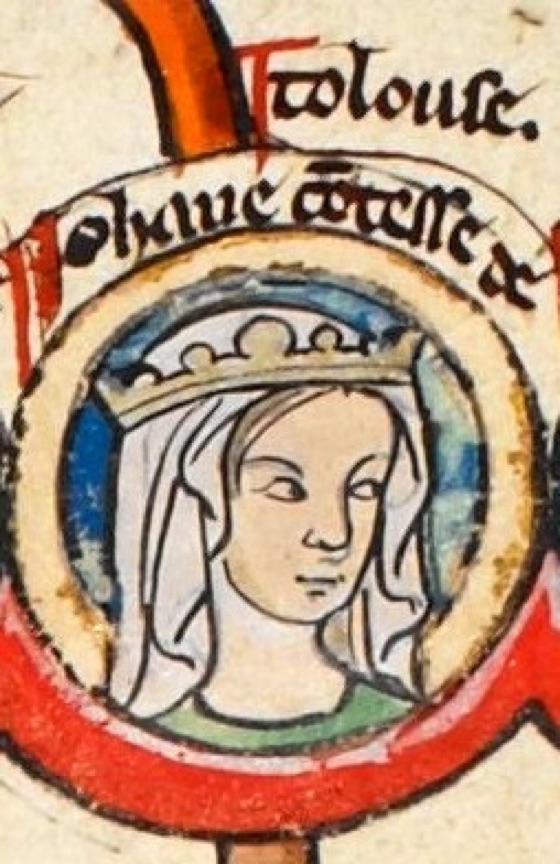
Portrait of Joan of England
The Piece That Would Not Move
She was, for most of her life, a piece on other people's boards. Daughter of Henry II and Eleanor of Aquitaine, Joan of England was married off at eleven to the King of Sicily, shipped across a continent to a court she had never seen, and made a queen before she was old enough to know what one was. When her husband died she was imprisoned by a usurper and stripped of her dower, and it took her brother storming a city to get her back. She was moved from kingdom to kingdom by the calculations of men — father, husband, brother, count — a woman defined, on paper, entirely by the uses others had for her.
And yet beneath all that being-moved there ran a will that answered to nobody. The defining moment of Joan's life was not a marriage but a refusal. During the peace talks that might have ended the Third Crusade, her brother Richard the Lionheart proposed marrying her to al-Adil, brother of Saladin, so that the two might rule Jerusalem together and stop the killing. It was a dazzling piece of statecraft. Joan met it with fury. She would not marry a Muslim; her faith and her feeling forbade it, and no reason of state could reach past them. The scheme died on her indignation. A princess whose whole existence had been arranged discovered, at the one moment it mattered most, that there was a line inside her that a king could not cross.
That is the ISFP signature: a private core of conviction — Fi — guarded by a vivid, physical courage — Se — in a woman who could be married against her convenience but never against her values.
The Line She Would Not Cross
Fi — dominant
Dominant Fi is an inner compass that answers to no external authority — a privately held sense of what is right and what one can bear, held so deep that argument cannot dislodge it. Joan spent most of her life bending to authority because she had to. She could be given away at eleven, imprisoned at twenty-three, dragged onto a crusade fleet at her brother's word. What she could not be made to do was betray the thing she believed. When the marriage to al-Adil was floated — a match that would have made her Queen of Jerusalem and ended a war — every worldly calculation pointed one way, and she went the other, because it violated her faith and her feeling, and for Fi that is the end of the conversation.
What is striking is how personal her refusal was. She did not argue policy or precedent; she was simply, vehemently unwilling, and her unwillingness was decisive. This is the difference between Fi and the outward, group-minded Fe of the accommodating type: an Fe-led princess weighs what the family needs and finds a way to be useful. Joan weighed what she could live with, and the dynasty's convenience did not enter into it. Her brother the king, the most formidable soldier in Christendom, could not talk her past the wall of her own conviction.
Present Through Shipwreck and Siege
Se — auxiliary
Auxiliary Se gives the ISFP's private core a courageous, physical presence in the world — a readiness to meet danger as it comes rather than retreat into deliberation. Joan's life was a long exposure to raw circumstance, and she met it with nerve. Widowed and imprisoned in Sicily by the usurper Tancred, she held her position until Richard stormed Messina and forced her release. She then did what few princesses of her rank would: she joined the crusade fleet. On the voyage her ship was nearly wrecked and driven onto hostile Cyprus — a peril that became one link in the chain by which Richard conquered the island — and she came through the storm and the standoff to continue on to the Holy Land. This is Se as endurance: the capacity to stay upright inside chaos.
The same steadiness shows in her second marriage, to Raymond VI of Toulouse — a turbulent union in a violent, faction-ridden land. When his vassals rebelled, Joan did not wait to be rescued. She took the field and laid siege to them herself. The princess who had been moved around the board her whole life could, when cornered, pick up the instruments of force and use them. Se is why her Fi was never merely private: her convictions came armored in the physical courage to act on them.
The Veil She Chose at the End
Ni — tertiary
Tertiary Ni gives the ISFP an intermittent reach toward meaning and finality — a sense of where a life is tending and what it is ultimately for. In Joan it is quiet, but it surfaces where it counts. Her refusal of al-Adil was not only a burst of feeling; it was a woman who understood, past all the diplomacy, that a marriage across the faith would define who she was for eternity, and who would not let a passing settlement write the ending of her story. Behind the flash of Fi there sat a fixed inner picture of the person she was meant to be.
That picture completed itself at her death. Dying young in 1199, in a difficult childbirth and soon after the brother whose fate had been braided with hers, Joan asked to be received and veiled as a nun of Fontevraud — the abbey where her parents would lie. It was a gesture toward closure and toward a meaning larger than the shuttling political life she had led: a claiming of the sacred over the strategic at the last threshold. The woman who had been moved from kingdom to kingdom decided, in the end, exactly where and as what she wished to arrive.
Why ISFP Over ISFJ
Why not ISFJ?
The dutiful, devout princess who endures captivity and shipwreck and marries where she is told reads, at a glance, like an ISFJ — the loyal daughter who subordinates herself to the family's needs. But the ISFJ's Fe accommodates; it finds a way to serve what those around her expect. At the decisive moment Joan did the opposite. When her brother proposed marrying her off to a Muslim prince for reasons of state, she did not accommodate — she erupted in furious personal refusal and killed the scheme. That is Fi's inner value-core overriding dynastic duty, not Fe's instinct to oblige.
The distinction is the whole of her. An ISFJ absorbs the family's expectations as her own and feels virtue in meeting them; Joan met them until the point where they touched what she believed, and there she stopped dead. Everything else — the endurance, the courage, the loyalty to Richard — is real, but it sits on top of a private conviction that no obligation could bend. She was not the accommodating daughter who yields; she was the one who could be moved anywhere on the board and still, at the one square that mattered, refuse to move at all.
Connected Figures
Further Reading
- Richard I — John GillinghamThe fullest modern account of Richard's crusade — and the clearest reconstruction of Joan's role in it and the al-Adil marriage scheme.
- Eleanor of Aquitaine: Queen of France, Queen of England — Ralph V. TurnerThe standard scholarly life of Joan's mother, essential for the Angevin family into which she was born and the marriages it arranged.
- The Crusades: The Authoritative History of the War for the Holy Land — Thomas AsbridgeA vivid single-volume history of the crusades that sets the diplomacy of the Third Crusade — including the peace-marriage gambit — in full context.
- A History of the Crusades, Vol. III: The Kingdom of Acre — Steven RuncimanThe classic narrative of the later crusades, valuable for the political world of Richard, Saladin, and al-Adil in which Joan briefly became a bargaining chip.
