 Historical Figure MBTI
#966 · 7-16-26 · The Eastern Front
Aleksandr Vasilevsky
Chief of the General Staff · The Planner Behind the Victories
1895 — 1977
6 min read
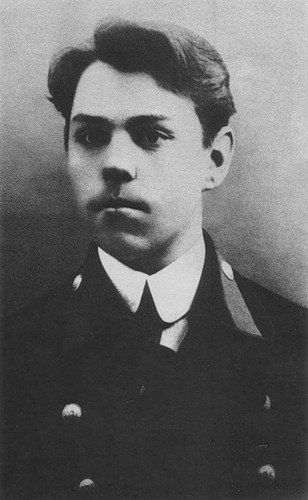
Portrait of Aleksandr Vasilevsky
The Man Who Drew the Trap
Every famous Soviet victory of the middle war has a name attached to it in the popular memory, and the name is almost never Vasilevsky. He commanded no legendary defence, made no scene in front of the dictator, and left behind no phrase quotable enough to survive into the anthologies. What he left instead was paper: operational directives, force allocations, timetables of rail movement, maps on which two arrows converge behind an enemy army. The son of a village priest, trained hurriedly as an officer in the last year of the Tsar, he became the man who spent the war in the map room of the Stavka drafting the plans that other men made famous by carrying them out.
He was Chief of the General Staff from 1942, which in practice meant working under a commander-in-chief who telephoned at three in the morning and expected the whole strategic picture to be in the head of whoever answered. Vasilevsky learned to keep it there. His colleagues remembered a man of almost eerie evenness, quiet in argument, who did not flatter Stalin and did not provoke him either, and who could present a plan so completely worked out that objecting to it required more energy than approving it. In this archive that is the profile of an INTJ: a long-range strategic conception, held privately until it is finished, and then delivered as a system.
The conception that mattered most was Operation Uranus. In the autumn of 1942, while the world watched the street-fighting in Stalingrad, Vasilevsky and Zhukov were quietly arguing for something the street-fighting was merely paying for — a double envelopment far out on the flanks, through the Romanian and Hungarian armies, closing behind the German Sixth Army. It is worth marking the date: what he sketched that autumn is the trap that would eventually close on Paulus, and it is the reason the story of Stalingrad ends the way it does.
Vasilevsky is the INTJ in uniform — dominant Ni conceiving the shape of a victory months before the ground exists to fight it on, and Te turning that shape into a movement table.
Seeing the Ending From the Middle
Introverted Intuition works backward from an imagined outcome, and Vasilevsky habitually planned that way. His instinct in a crisis was not to solve the crisis but to ask what configuration the front would be in six weeks from now and what could be positioned today to exploit it. The Uranus concept was exactly that inversion: the correct response to a German army grinding itself into a ruined city was not to reinforce the city but to starve the reserves, let the enemy consume himself against rubble, and mass everything for a blow at the weak allied armies on his shoulders.
The same faculty produced the deception and preparation phases he was best at — the maskirovka that hid entire tank armies, the deliberate holding of reserves that no front commander was permitted to touch. It also produced Operation Bagration in 1944 and, in a matter of weeks in 1945, the Manchurian offensive against the Kwantung Army, a campaign staged across thousands of miles of rail and executed with a speed that remains a textbook case. Ni does not improvise on the day; it arranges the day in advance so that improvisation is unnecessary.
From Vision to Movement Table
A conception is worthless in war until it becomes a schedule, and Vasilevsky was the rare planner who could do both halves himself. As Chief of the General Staff he ran an institution that had been gutted by the purges and rebuilt under fire, and he ran it by relentless personal verification — long stretches spent as Stavka representative at the fronts, checking whether the units on his own maps existed in the strength the paperwork claimed. He was as much auditor as author, and he treated the discrepancy between plan and reality as the primary enemy.
His Te also governed how he handled Stalin, which was a command problem in its own right. He did not win arguments by force of personality, as Zhukov did; he won them by arriving with the alternatives already costed and the objections already answered, so that approval was the path of least resistance. It is a quieter method and it worked more often.
The Priest's Son Who Kept His Own Counsel
Tertiary Introverted Feeling in an INTJ surfaces as a small, stubborn set of private loyalties in a man otherwise governed by system. Vasilevsky was the son of an Orthodox priest in a state that persecuted priests, and for years he broke off contact with his family to protect his career — a severance he resumed only when Stalin, of all people, told him to. He never made a display of the wound. But the care he took over the lives of the officers who worked for him, and the absence from his record of the denunciations that greased so many Soviet careers, suggest a man keeping an interior account of what he would and would not do.
Why INTJ Over ISTJ
Why not ISTJ?
The quietness invites an ISTJ reading, and the staff role reinforces it — a meticulous, self-effacing administrator keeping the machine running. But administration was not his contribution. Vasilevsky originated the strategic conceptions themselves: the flank encirclement at Stalingrad, the shape of Bagration, the Manchurian campaign designed around an enemy he had never fought. An ISTJ perfects an established procedure; Vasilevsky repeatedly proposed the operation nobody had asked for, on the grounds that he could see where the war was going to be in two months.
The distinction is clearest when he is set beside Timoshenko, the genuine Si-dominant of this day, whose response to disaster was to reach for the prewar manual harder. Vasilevsky reached instead for the map and asked what the enemy would have to do next. That difference — between refining the known and conceiving the unbuilt — is the whole gap between ISTJ and INTJ, and it is the reason his name is on the plans rather than on the after-action reports.
Connected Figures
Further Reading
- A Lifelong Cause — Aleksandr VasilevskyHis own memoir of the General Staff years, unusually free of settling scores.
- When Titans Clashed: How the Red Army Stopped Hitler — David M. Glantz and Jonathan HouseThe operational backbone of the Eastern Front, including the planning behind Uranus and Bagration.
- Stalingrad: The Fateful Siege, 1942–1943 — Antony BeevorNarrative account of the battle whose outcome the General Staff plan determined.
- Stalin's Wars: From World War to Cold War, 1939–1953 — Geoffrey RobertsHow Soviet strategy was actually made inside the Stavka.
- The Soviet Strategic Offensive in Manchuria, 1945 — David M. GlantzThe Manchurian campaign Vasilevsky planned and commanded in the war's final weeks.
