 Historical Figure MBTI
5 min read
#224 · 3-21-26 · The Age of Alexander
Cleopatra of Macedon
The Prize of the Empire
c. 354 – 308 BCE
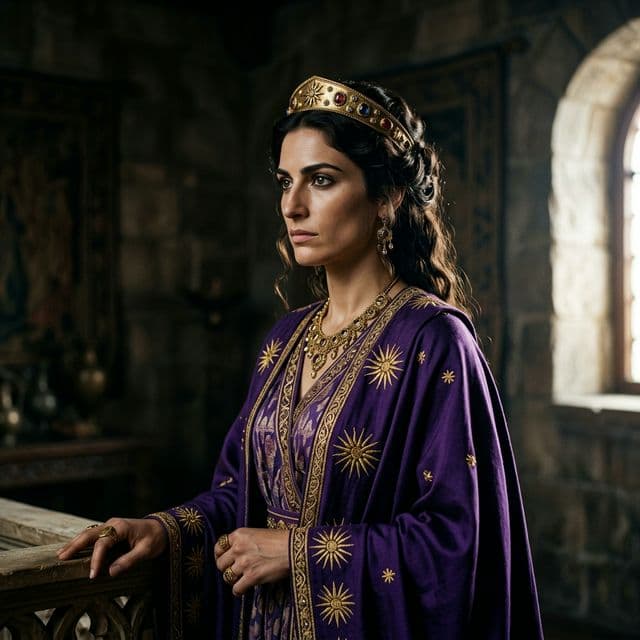
AI-assisted portrait of Cleopatra of Macedon
The Architecture of Sovereignty
Cleopatra of Macedon did not just inherit a name; she weaponized a lineage. As the full sister of Alexander the Great and the daughter of Philip II and Olympias, her life was defined by the profound, external management of political reality and the structural preservation of her family’s power (Te). While others saw her as a pawn in the game of the Diadochi, Cleopatra’s genius was profoundly oriented toward the active, strategic command of her own destiny. She was the one who understood that in the vacuum left by her brother, her own person was the only legitimate anchor for the empire.
She was the master of the diplomatic maneuver and the structural truth. From her regency in Epirus to her daring negotiations with Perdiccas and Antigonus, Cleopatra’s cognitive mode was focused on the objective maintenance of herself as the ultimate political prize. For Cleopatra, power was something to be navigated and controlled through the sheer force of her own strategic will.
Historical Context
Cleopatra of Macedon was the daughter of Philip II and Olympias, and the only full sibling of Alexander the Great. Following Alexander's death, she became the most sought-after bride in the Hellenistic world, as marriage to her conferred a near-absolute claim to the Macedonian throne. She lived in Sardis for many years, effectively a prisoner-queen, where she played a high-stakes game of diplomacy, offering her hand to nearly every major successor—Perdiccas, Eumenes, Cassander, and finally Ptolemy. She was eventually murdered by Antigonus in 308 BCE to prevent her from escaping to join Ptolemy in Egypt. Her life represents the extreme intersection of royal status and the desperate search for autonomy in an age of giants.
The Psychological Verdict
Cleopatra of Macedon is a definitive ENTJ. She was a leader defined by her relentless focus on external organization and strategic command (Te), guided by a clear, inter-generational vision for the Argead house (Ni), and supported by an intense, physical command of her own presence and status (Se).
Te — Dominant
Her primary mode was the application of logic to the political map. Cleopatra understood the objective value of her lineage with a cold, analytical clarity. Her decisions were characterized by a focus on the most effective use of her status to achieve her own goals. She didn't wait for the successors to decide her fate; she proactively engaged in negotiations, treating her hand in marriage as a strategic asset to be deployed with maximum efficiency. She was the commander of her own lineage.
Ni — Auxiliary
Supporting her will was a deep, intuitive vision of the Argead future. Like her mother Olympias, she was fixated on the survival and dominance of her family line. This auxiliary Ni allowed her to see through the immediate flattery of the successors to the systemic realities of their competition. She understood that she was the bridge between the old world and the new, and she spent her life trying to build that bridge on her own terms. She saw the outcome of the struggle for power long before it was over.
Se — Tertiary
Cleopatra was a woman of immense presence and royal aura. Her tertiary Se gave her the physical command and poise to face the most powerful men of her age as an equal. She thrived in the high-stakes environment of the court, using her sensory impact and her command of royal protocol to maintain her authority. She understood the power of the image and the impact of the royal presence, using it as a tactical weapon in her diplomatic arsenal.
Fi — Inferior
What stayed in the background was the processing of her own, internal subjective world. Cleopatra’s decisions were driven by the objective needs of her house and her status, reflecting an inferior Fi that prioritized systemic survival over personal happiness. Her life was a study in the sacrifice of personal sentiment to the altar of political necessity. Her tragedy was that she was so effective as a political object that she was never allowed to be a person.
The Name That Was Too Dangerous to Marry
Cleopatra of Macedon was the full sister of Alexander the Great — not a half-sister, not a political connection, but the daughter of both Philip and Olympias, which made her the most legitimate Argead princess alive after Alexander’s death. Multiple Diadochi reportedly sought to marry her precisely for that legitimacy: Eumenes, Perdiccas, Lysimachus, and Ptolemy were all rumored candidates. She remained unmarried for over a decade after her first husband’s death — reportedly by choice, holding out for a match that would actually secure her independence rather than simply transfer her from one patron to another. She was murdered in Sardis around 308 BCE, likely by agents of Antigonus, who feared what her marriage to any rival might mean. The assassination confirmed her strategic value. She had been too dangerous to allow to choose.
Connected Figures
Further Reading
- Women and Monarchy in Macedonia — Elizabeth Donnelly CarneyThe essential account of Cleopatra of Macedon's decade as the most contested marriage prize among the Diadochi.
- Dividing the Spoils: The War for Alexander the Great's Empire — Robin WaterfieldTraces the string of suitors — Perdiccas, Eumenes, Ptolemy — whose rivalry over her hand shaped a generation of war.
- The Legacy of Alexander: Politics, Warfare, and Propaganda under the Successors — A. B. BosworthExplains why the last full Argead sibling's legitimacy made her too dangerous for Antigonus to let marry.
- Antigonos the One-Eyed and the Creation of the Hellenistic State — Richard A. BillowsCovers her captivity at Sardis and assassination from the vantage of the man who ordered it.
