 Historical Figure MBTI
#231 · 3-21-26 · The Age of Alexander
Craterus
Macedonian General · Alexander's Most Trusted · The Soldier's Soldier
c. 370 — 321 BC
6 min read
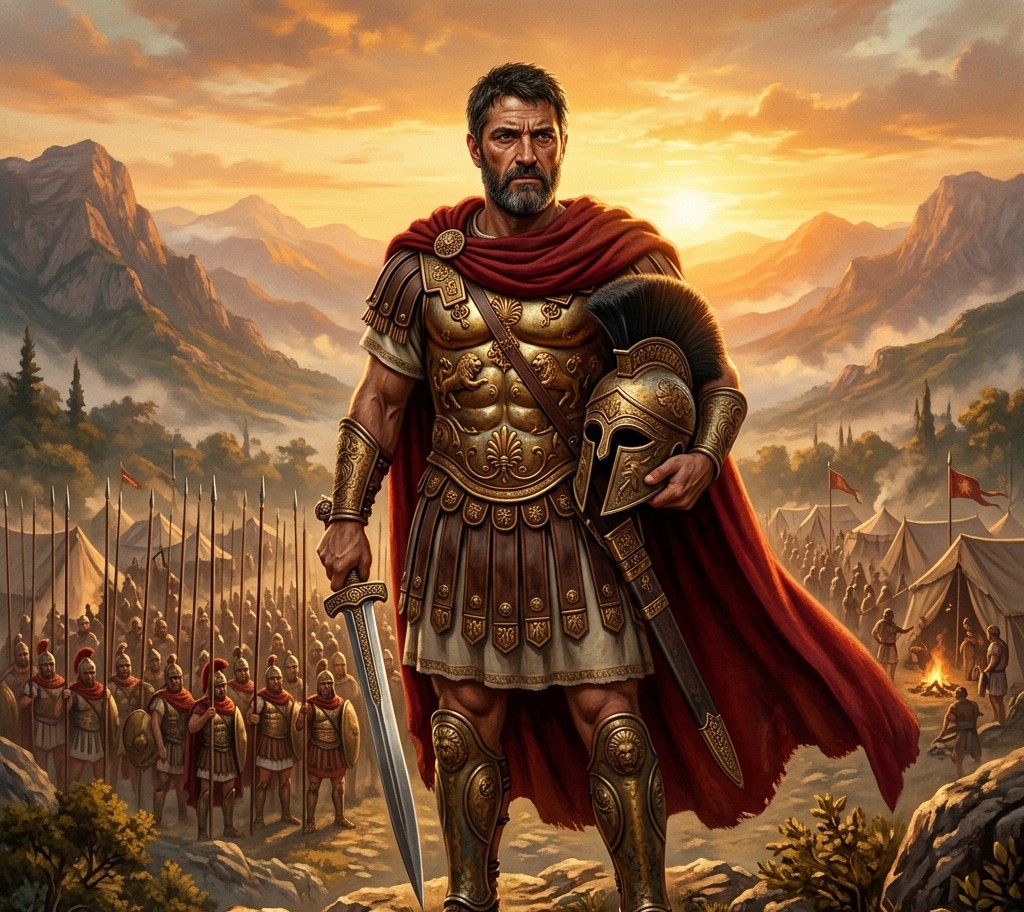
AI-assisted Portrait of Craterus
The Man the Army Loved
When the phalanx grumbled, it grumbled for Craterus. As Alexander wore Persian dress and required proskynesis, Craterus stood for the old ways—plain-spoken, dutiful, devoted to the kingdom rather than to the glittering new thing it was becoming. The soldiers recognized one of their own and loved him with a constancy they gave to no one else.
Alexander said that Hephaestion was a friend of Alexander (philalexandros), while Craterus was a friend of the king (philobasileus)—Hephaestion loved the restless man, Craterus loved the office and the Macedon that had to exist after him. Craterus was the conscience of the old kingdom inside the new empire, trusted to be incorruptible where everyone else was brilliant and dangerous.
Craterus was the ISTJ of the age of adventurers—dominant Si bound to the tested ways of old Macedon, auxiliary Te making him the most dependable executor in the army, loyal not to the dazzling person of the king but to the institution the king had inherited.
The Keeper of the Old Ways
Si — dominant
Dominant Si lives by precedent. When Alexander adopted Persian court dress, Craterus did not see a brilliant fusion—he saw the abandonment of a known order: the rough-handed equality of the Companions, the king who was first among soldiers. He kept the old habits even as Alexander moved on, and the army read that fidelity instantly.
Si does not argue from theory; it argues from accumulated practice. When Alexander needed to send ten thousand veterans home from Opis in 324 BC and relieve the aging Antipater, he chose Craterus—the safest pair of hands in the empire, the officer least likely to improvise a betrayal. Si is trusted because it does not surprise you, and Craterus was the most trusted commander Alexander had.
The Dependable Executor
Te — auxiliary
If Si told Craterus what was right, auxiliary Te told him how to get it done. He rose through unbroken reliability across the whole sweep of campaigns: commanding the left wing at Gaugamela, leading independent commands in the Indian campaign, conducting the elephants and heavy baggage back through Arachosia while Alexander took the deadly Gedrosian desert. Alexander split his forces and handed Craterus the column he could not afford to lose.
What distinguishes Craterus's Te from the colder, more imperial Te of an Antigonus or a Ptolemy is that it served his Si rather than overrunning it. He used organizational power to preserve a known order, not to build a personal empire. That subordination of competence to tradition is the ISTJ signature: the executor who keeps the machine running as it was built to run.
The Quiet Conscience
Fi — tertiary
Tertiary Fi rarely announces itself; it shows up as an inward sense of honor that the man would sooner act on than discuss. Craterus's resistance to proskynesis and Persian dress was not merely traditionalism—it carried a moral charge. He felt that the king was forsaking the men who had won him his throne, and he held to his own standard of right conduct even when it isolated him among courtiers eager to please.
That Fi appears most vividly in his rivalry with Hephaestion, which turned violent in India—the two drew swords, and Alexander intervened personally. The quarrel was not careerist maneuvering; it was the collision of two men who each felt he was the truer servant of the king. His feeling function made him not warm but trustworthy—principled and stubborn in defense of what he had silently decided to honor.
The Closed Door to the New
Ne — inferior
Inferior Ne is the ISTJ's blind spot: the realm of open possibility, which the Si-dominant mind meets with instinctive distrust. Alexander's great project was exactly that—a wager that Macedonian and Persian could be blended into something wholly new. When Alexander died, the Diadochi rewarded improvisation and raw ambition. Craterus did not scheme to carve a kingdom; he aligned himself with the established regency—and that instinct, however honorable, left him a step slower than the men who improvised.
In 321 BC Craterus crossed into Asia Minor to crush Eumenes of Cardia, counting on Macedonian troops to refuse to fight the general they adored. Eumenes screened his front with Asiatic cavalry who neither knew nor revered Craterus. Craterus fell from his horse and was trampled—killed by the very surprise his Si-bound imagination had failed to foresee. The man of tested ways was undone by an opponent who lived in possibility.
Why ISTJ Over ESTJ
Why not ESTJ?
The ESTJ leads with Te: a force that organizes people toward goals it actively defines. Craterus had powerful Te, but it sat in service to something deeper. He conserved an inherited order; he did not construct a new one. The ESTJ asks “how do we get this done?” Craterus asked “how has this always rightly been done?”—that priority of preservation over assertion marks him as Si-first.
The clinching evidence is his behavior after Alexander's death. An ESTJ would have converted the love of ten thousand veterans into a kingdom. Antigonus and Ptolemy did exactly that. Craterus deferred to the existing settlement and died fighting for a coalition. He was loved because he wanted nothing for himself, and he died because, in an age of men who wanted everything, that was not enough.
Connected Figures
Further Reading
- Alexander the Great — Robin Lane FoxThe most vivid narrative of the campaigns in which Craterus served, with close attention to his role and character.
- The Successors to Alexander the Great — Waldemar HeckelA prosopographical study of the Diadochi that provides the most detailed scholarly treatment of Craterus's career and death.
- Dividing the Spoils: The War for Alexander the Great's Empire — Robin WaterfieldA clear narrative of the Wars of the Successors and Craterus's pivotal but brief role within them.
- The Wars of Alexander's Successors 323–281 BC — Bob Bennett and Mike RobertsA detailed military history of the Diadochi conflicts, including the Battle of the Hellespont where Craterus fell.
