 Historical Figure MBTI
#1011 · 7-26-26 · The Second World War
Rudolf Hoss
Commandant of Auschwitz · Industrialized Murder · The Family Man Next Door
1901 — 1947
9 min read
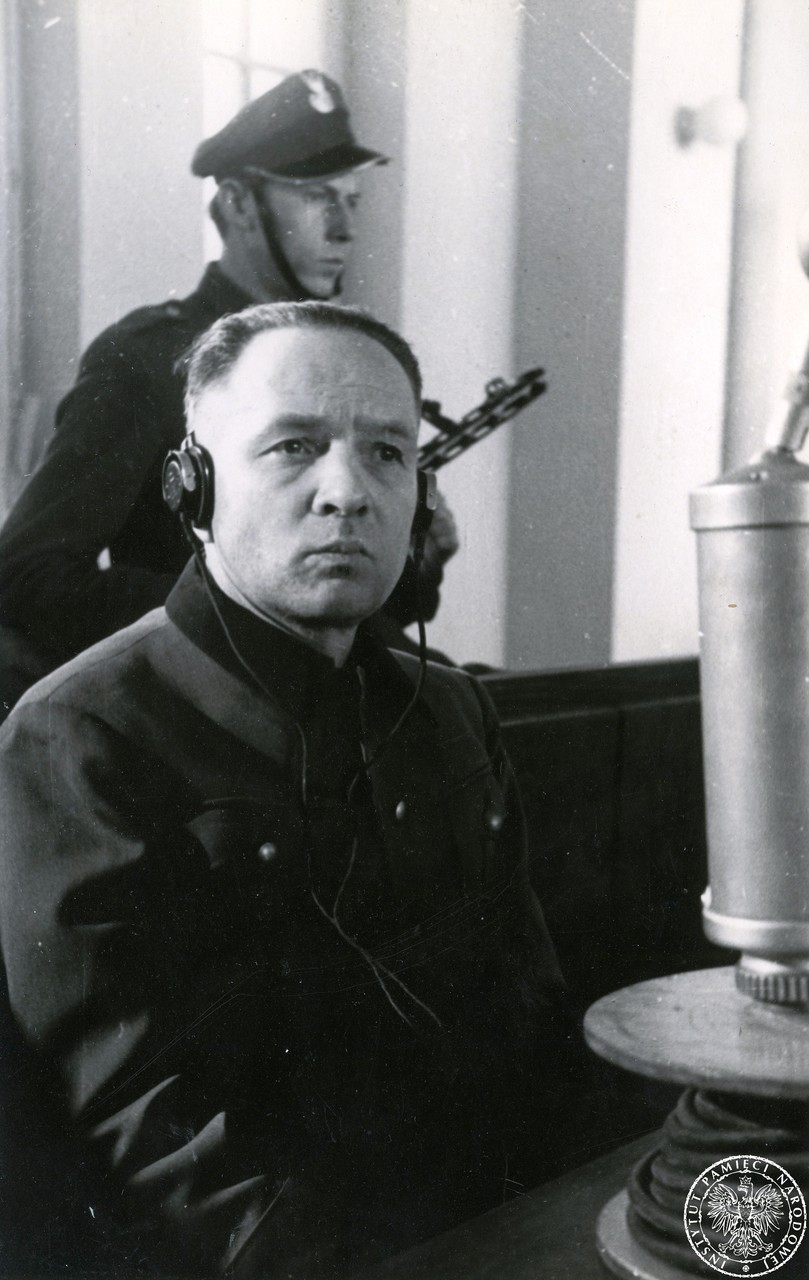
Portrait of Rudolf Hoss
The Plant Manager of a Death Factory
Rudolf Hoss was the founding commandant of Auschwitz, and under his administration the camp murdered well over a million people — the overwhelming majority of them Jews, along with Poles, Roma, and Soviet prisoners of war. He did not merely preside over this. He engineered it. He selected and expanded the site, ordered the construction of the Birkenau killing complex, oversaw the first experimental gassings with Zyklon B on Soviet POWs in September 1941, and then scaled that method into permanent gas chambers and crematoria capable of killing and burning thousands of people a day. The selection ramp, the undressing rooms disguised as showers, the timing of the columns so that one transport was destroyed before the next arrived — these were operational problems, and he solved them.
He also stole from the dead at industrial scale, ran a slave-labor economy for IG Farben and other German firms, and presided over starvation, medical experimentation, and mass shooting at the Black Wall. In 1944 he returned to Auschwitz for a special assignment — known inside the SS as “Aktion Höss” — to absorb the Hungarian deportations that Adolf Eichmann was dispatching, and the camp killed at a rate it had never previously reached.
What makes him unbearable to read is not rage or sadism. It is the tone. Captured by British field security in 1946, he testified at Nuremberg and then wrote, in Polish custody before his own trial, a long and methodical autobiography — the single most detailed perpetrator account of the Holocaust in existence. In it he discusses ventilation problems, the comparative merits of gas and shooting, staffing difficulties, and throughput, in the register of a plant manager writing up a difficult production year. He complains about the strain the work put on him. His wife and five children lived in a villa a short walk from the crematoria, with a garden, and he describes that home as a paradise. He was hanged at Auschwitz in April 1947, on a gallows erected beside the camp’s first crematorium.
Hoss is ISTJ at its most terrifying: dominant Si turning atrocity into routine, so that a man could optimize a killing line by day and tend his roses in the evening, and never feel the two facts touch.
Routine as Anesthetic
Introverted Sensing builds the world out of accumulated, concrete detail and then defends that world by repeating it. Hoss’s memoir is Si laid open: page after page of exact recollection about camp layout, guard rosters, disinfection procedures, and the mechanics of the crematoria, and almost nothing about the interior life of a single victim. He remembers the technical failure of the first ovens more vividly than he remembers any human face. Detail without perspective is the signature of this function gone wrong, and he had it in a pure form.
He came to the SS already formed by institutions. A soldier at sixteen in the First World War, then a Freikorps paramilitary, then a convicted participant in a political murder who served years in prison, then — critically — a trainee at Dachau from 1934 under the camp system’s founding disciplinarians. He absorbed the Dachau method as a template and carried it into Poland intact. When he built Auschwitz, he was not improvising a moral universe; he was extending a procedure he had been taught, into a bigger space, with a larger budget.
Si also explains the domestic split that so many readers find impossible. Habituation is what this function does: it converts the shocking into the normal by repetition, and Hoss himself describes becoming inured to scenes that had at first disturbed him. He did not resolve the contradiction between the garden and the chimney. He simply stopped registering it as a contradiction, because both had become part of the daily round.
The Arithmetic of Throughput
Extraverted Thinking wants a measurable result and will redesign any system to get one. Summoned to Berlin in 1941 and told by Heinrich Himmler that Auschwitz would become an extermination center, Hoss treated the assignment as an engineering brief. Mass shooting, he concluded, was inefficient and hard on the shooters; carbon monoxide vans were too slow and too small. Zyklon B, a commercial pesticide already used for delousing, killed faster, in larger batches, at lower cost, and — a point he emphasized — spared his men the psychological burden of firing squads. He tested it, adopted it, and built to it.
Everything downstream of that decision was a capacity calculation. He compared his operation favorably to Treblinka’s at Nuremberg, noting that his facilities could handle far more people at once. He pushed for crematoria that would not break down under load. He organized the plunder of the murdered into sorted, catalogued warehouses. He ran the slave-labor contracts that made the camp a profit center. The vocabulary of his own account — capacity, processing, disposal — is the vocabulary of logistics applied to human beings, without irony and without a flinch.
Te also drove him to solve the wrong problem with great competence. The frictions that occupied him were administrative: corruption among his guards, supply shortages, typhus outbreaks damaging the labor force, the difficulty of maintaining secrecy. He was, by the standards his superiors set, an excellent officer. That is precisely the indictment. His competence is what turned an ideological intention into a functioning industry of death.
Duty Mistaken for Virtue
Tertiary Introverted Feeling gave Hoss a private moral vocabulary that he applied to himself and almost never to his victims. His memoir is full of feeling — but it is feeling about his own hardship. He writes of the burden he carried, of nights he could not sleep, of having to hide his distress from his staff so as not to appear weak, of the loneliness of a commandant who could confide in no one. He was, in his own telling, a man who suffered for doing a difficult duty properly.
What that inner ledger recorded as virtues were obedience, hardness, thoroughness, and family devotion. He genuinely valued being a good husband and father, and the Höss household was by all accounts an affectionate one. Fi at this depth does not audit its own premises; it simply attaches strong personal conviction to whatever content the person has absorbed. He was loyal, and loyalty felt like integrity.
In Polish custody, awaiting execution, something did crack. He wrote that he had come to see the enormity of what he had done, and his final statement acknowledged the guilt he bore. Historians have long argued over how much of this was genuine and how much was the last performance of a man who had always shaped himself to his surroundings. Both readings fit the function: an inward moral sense that was real but borrowed, and that could only find the truth once the structure supplying its content had been destroyed around him.
No Door Marked Otherwise
Inferior Extraverted Intuition means the alternatives are never generated. Hoss reports that when Himmler gave him the order, he was startled — and then he began planning. At no point in his account does he seriously entertain refusal, transfer, delay, or sabotage as live options; the order arrived as a fixed feature of reality, and his mind moved immediately to implementation. He even records, as if it settled the matter, that he had been told the Führer had ordered it and that questioning was not for him.
The same blindness prevented the imaginative act that might have stopped him: standing, for one moment, on the other side of the ramp. He could describe what he saw at the gas chamber doors with extraordinary precision and could not inhabit it. Rees, Sereny, and others who have worked closely on perpetrator testimony keep arriving at this same wall — an intelligence that is dense with facts and empty of perspective.
Where inferior Ne did break through, it came as dread rather than insight: the nightmares he half-admits to, the drinking, the sense he describes of a machine that had grown beyond anyone’s control. Weak Ne can sense that something is wrong without ever framing what. It gave him unease. It never gave him a way out, because he never went looking for one — and other Germans, in the same years and at real risk, did.
Why ISTJ Over ESTJ
Why not ESTJ?
An ESTJ leads outward: commands a room, projects authority, builds influence through visible presence. Hoss did none of that. Colleagues and subordinates described him as taciturn, remote, and uncomfortable in company, a man who dealt in memoranda and inspections rather than speeches, and who retreated to his office and his horses. He complained in his memoir about the loneliness of his position and his inability to talk to anyone about it — an odd affliction for a dominant-Te commander. His crimes were committed through quiet procedural devotion, not command charisma: Si first, Te in service of it.
The introversion matters to the argument rather than merely decorating it. A public, commanding perpetrator can be filed away as a type of tyrant, and tyrants are a known quantity. Hoss was the other thing — the conscientious middle manager, the man who is punctual and thorough and slightly dull, who takes the difficult posting because someone has to, who would be a credit to any organization that gave him a clear objective. The Third Reich gave him one. Everything that made him a reliable officer became, in that setting, an instrument for murdering a million people, and it never occurred to him that being good at his job was not the same as being good.
Connected Figures
Further Reading
- Commandant of Auschwitz — Rudolf HössHis own memoir, written in Polish custody in 1946-47 — the most detailed perpetrator account of the Holocaust, and the primary source for nearly everything above.
- Auschwitz: A New History — Laurence ReesTraces the camp's evolution from Polish barracks to extermination complex, with extensive perpetrator and survivor testimony.
- Into That Darkness: An Examination of Conscience — Gitta SerenyHer long interrogation of Treblinka commandant Franz Stangl remains the definitive study of how camp commandants explained themselves.
- KL: A History of the Nazi Concentration Camps — Nikolaus WachsmannThe standard modern history of the camp system Hoss was trained in at Dachau and later expanded at Auschwitz.
