 Historical Figure MBTI
The Tang Dynasty
~618 – 756 CE
Wu Zetian, Li Bai, Du Fu, and the golden court that collapsed under An Lushan's rebellion.


China's golden age, when the court of Chang'an was arguably the most cosmopolitan city on earth — home to Persian merchants, Buddhist monks, Zoroastrian temples, and the finest poetry ever written in Chinese. Li Bai wandered the empire with a wine flask and wrote the moon into legend. Du Fu watched the golden age collapse and became its elegist. Wu Zetian — the only woman in Chinese history to rule as Emperor in her own name — made and unmade empires through sheer political genius.
And then An Lushan — the charming, multilingual frontier general who performed dances at court to make the emperor laugh — launched a rebellion that killed millions and ended the dynasty's confidence forever. The Tang Dynasty is a story of extraordinary height and devastating fall, all within a single century.
13 figures · sorted by birth year
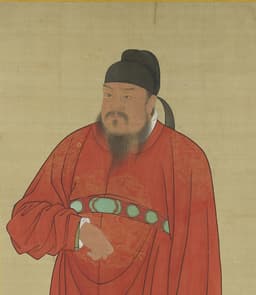
Emperor Gaozu of Tang
notableENTJ · b. 566
The Calculated Founder Who Waited — Then Took the Mandate
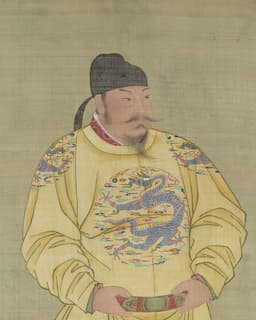
Emperor Taizong of Tang
notableENTJ · b. 598
The Strategist Who Secured the Dynasty

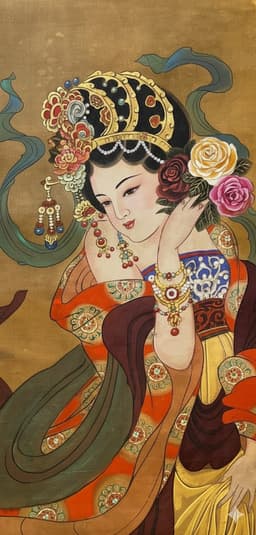
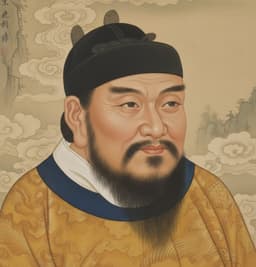
Emperor Gaozong of Tang
notableINFP · b. 628
The Gentle Sovereign in a Violent Court.
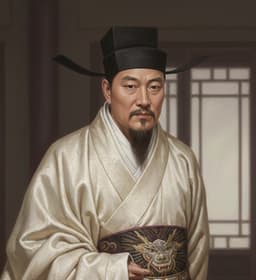
Zhang Jiuling
notableINTJ · b. 678
Chancellor, Remonstrator, Structural Guardian.
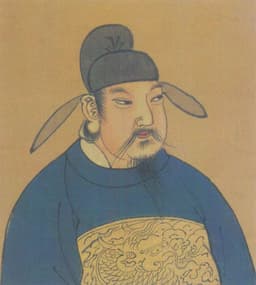
Emperor Xuanzong of Tang
notableINFJ · b. 685
Architect of the Kaiyuan Golden Age — and the Emperor Who Drifted
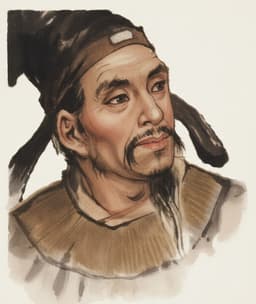
Wang Wei
notableINTJ · b. 699
Poet, Painter, Musician — Architect of Emptiness.

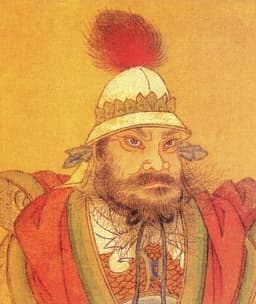
An Lushan
notableESTP · b. 703
Frontier General, Court Performer, and the Kinetic Force That Broke an Empire
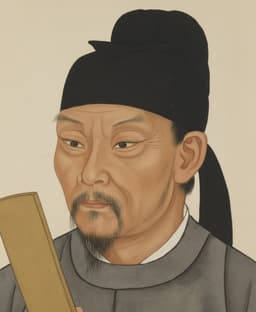

Yang Guifei
notableISFP · b. 719
Imperial Consort, Cultural Muse, and the Tragic Beauty of the Tang Court

Yang Guozhong
notableESTJ
Court Chancellor, Factional Enforcer, and the Administrator Who Misjudged a Storm

Sign up for monthly insights
Monthly insights into history's most influential figures — examined through psychology, context, and cognitive pattern. Less stereotype, more structure. History, but with a mind map.
Powered by Buttondown