 Historical Figure MBTI
#778 · 6-10-26 · The Conquest of the Andes
Manco Inca
The Puppet Who Besieged Cusco
c. 1516 — 1544
7 min read
Portrait of Manco Inca
The Crown They Handed Him, and What He Did With It
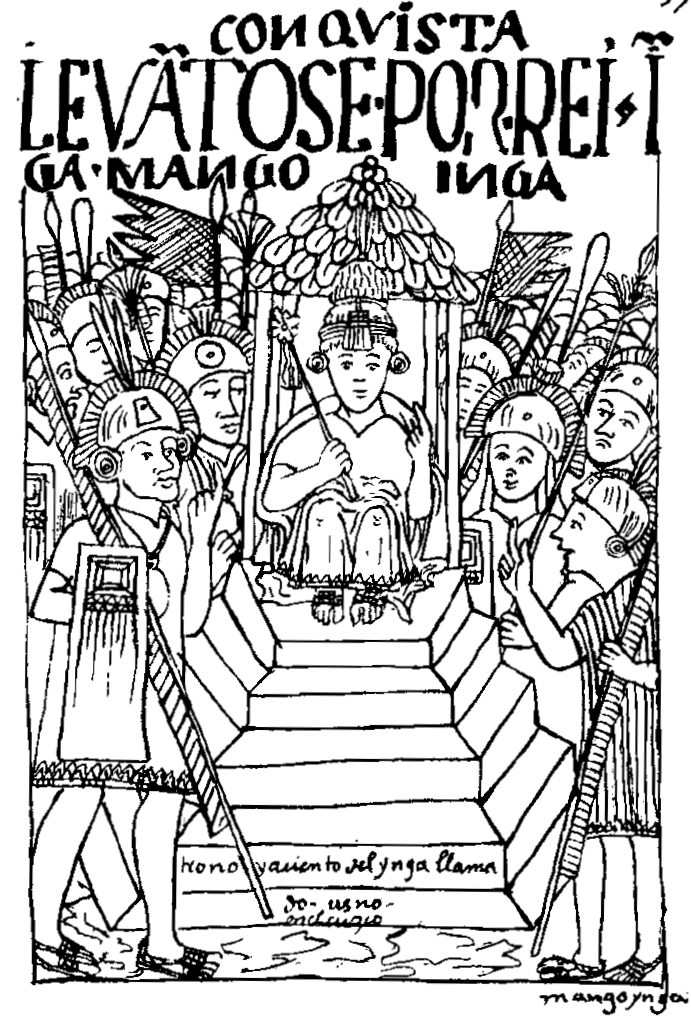
The Spanish gave him the fringe because they needed one. With Atahualpa garroted and the Andes still full of armies that had never seen a European, Francisco Pizarro required a Sapa Inca who could be paraded through Cusco, seated under the canopy, and made to say in Quechua that the conquest was lawful. A young son of Huayna Capac — untested, on the losing side of the civil war, and therefore grateful — was the ideal instrument. For a season the arrangement worked. Manco Inca performed the rites, endorsed the occupation, and lent the invaders a legitimacy no cavalry charge could have manufactured.
What the Pizarros failed to notice is that they had not installed a figurehead. They had installed an administrator — one who spent those cooperative months watching exactly how few Spaniards there actually were, where their horses were stabled, how their reinforcements arrived, and how completely their power depended on the ceremonial machinery he was being asked to operate. The humiliations accelerated: his wives taken, his person struck, his office openly mocked by men who needed it to be real. And then, in 1536, the puppet walked out of Cusco and came back with an army that historians have traditionally numbered north of a hundred thousand, and nearly finished the Spanish presence in Peru in a single stroke.
He did not merely revolt. He besieged a city for ten months, learned to ride the enemy’s horses and fire the enemy’s weapons, and when the siege failed he did the least romantic and most revealing thing available: he withdrew to the cloud forest of Vilcabamba and built a functioning state there, which he ran for eight years. That last move is the whole psychological argument. Rage produces a siege. Only a strategist produces a government in exile.
Manco Inca is the archive’s ENTJ of the dispossessed: a dominant Te that could not stop building systems even after its empire had been taken, turning a failed siege into a rebel kingdom with borders, a court, and a succession.
Te — The Man Who Rebuilt the Machine
The siege of Cusco is usually told as a story of numbers, and the numbers are staggering, but the logistics are the real evidence. Manco Inca did not summon a mob. He reactivated the Inca state’s administrative nervous system — the road network, the provincial levies, the storehouses, the runners — from outside it, without the capital, without the treasury, and against the men who currently occupied both. He coordinated a mobilization across enormous distances, sustained an encirclement for the better part of a year, and fed it. That is not charisma. That is an executive rebuilding a supply chain from memory.
Dominant Te is defined less by aggression than by ruthless indifference to the provenance of a tool. Manco Inca’s most famous innovation is exactly this: he took captured Spanish horses and learned to ride them, took captured Spanish steel and learned to use it, and folded both into an Andean order of battle. Every instinct of pride and of ritual purity argued against it — these were the objects of the men who had defiled his household. He adopted them anyway, because they worked, and because a Te dominant evaluates a weapon by its output and not by its ancestry. The Spanish monopoly on cavalry was the single decisive asymmetry of the conquest, and he is the only Andean leader who seriously attacked it by acquiring the capability rather than merely enduring it.
And when the siege broke, the Te did not break with it. Vilcabamba was not a hideout; it was an institution. He chose terrain that nullified the horse, established a court, maintained the religious offices, staged raids on Spanish traffic along the highland roads, and arranged a line of succession that would outlive him by three decades in his heirs Titu Cusi Yupanqui and, ultimately, Tupac Amaru. He lost the empire and immediately began administering a smaller one.
Ni — Reading the Length of the War
The cooperative period is the most misread stretch of his life. Read as weakness, it looks like a boy collaborating with his family’s murderers; read as auxiliary Ni, it looks like a man waiting for a picture to resolve. He had watched the invaders destroy Huascar’s faction and Atahualpa’s both, and he seems to have understood early what almost no one else did: that these men were not a raiding party to be absorbed into Andean politics as one more contending faction, but a permanent occupation with a homeland behind it. The revolt of 1536 was not a tantrum after one insult too many. It was timed to a moment when the Spanish were split by their own feuds and dispersed across the country — the single window in which the arithmetic favored him.
Ni also explains what he did with defeat, which is the harder test. The siege came genuinely close, and it failed for reasons that a purely tactical mind would have read as bad luck: cavalry sallies, reinforcements, and the brutal fact that an army of farmers has to be released for the planting season or the whole highland population starves. A leader living inside the present would have regrouped and tried the same thing again. Manco Inca instead concluded that the mass-army approach was structurally dead — that no number of men on open ground would ever solve the horse — and changed the shape of the war entirely.
Vilcabamba is that conclusion made geographic. Montane jungle, narrow approaches, no ground for cavalry, and a defensible distance from every Spanish garrison: he selected terrain that converted his weakness into the enemy’s. And he settled in for a horizon no one else on either side was thinking in. Eight years of raids and refusal, a state kept alive not to win a battle but to outlast a colonial regime that might yet tear itself apart — as, in the Almagrist wars, it very nearly did.
Se — Learning to Ride the Thing That Beat You
Tertiary Se in an ENTJ shows up as physical appetite in service of the plan — the willingness to get on the animal, take the field, and learn the enemy’s body language firsthand rather than receive it in a report. Manco Inca did not delegate the horse. He rode it. A man raised in a culture with no draft animals larger than a llama put himself on the back of the specific machine that had shattered Andean infantry at Cajamarca, and made himself competent on it, and fought from it in Spanish arms. Contemporary Spanish accounts register this with something close to alarm.
The same appetite runs through his escapes and his raiding years. He slipped Spanish custody more than once, moved constantly through the highlands, and ran Vilcabamba as an operating base rather than a retreat — descending onto the roads, taking Spanish travelers and pack trains, and vanishing back into the montane cover. This is a commander who stayed in physical contact with his war for eight years, in country that would have killed a softer man.
But notice how the Se stays harnessed. Every act of daring is attached to an objective the Te and Ni have already set: acquire the capability, hold the corridor, keep the state solvent. He never fights for the pleasure of the fight, and he never gambles the project on a personal display. The boldness is an input, not a temperament.
Fi — The Guests He Should Not Have Taken In
Inferior Fi is the ENTJ’s blind quarter: a private, largely unexamined register of honor and personal loyalty that operates beneath the strategic calculus and occasionally overrides it. In Manco Inca it surfaces first as the thing that ended the puppet arrangement. The occupation was survivable as policy; it became unbearable as insult. The theft of his wives, the blows, the open contempt from Hernando Pizarro and his brothers — these were injuries to a self that had no vocabulary for processing them, and when the break came it came with a totality that surprised everyone.
And it killed him. In 1544 a band of Spanish fugitives — partisans of the executed Diego de Almagro, running from the colonial civil wars — arrived at Vilcabamba, and Manco Inca took them in. He housed them, protected them, reportedly played games with them. It is possible to construct a strategic rationale — they knew Spanish tactics, they hated the Pizarros, they could be useful — but the sources describe something warmer and more careless than policy: a man who had been alone at the head of a shrinking state for eight years, extending hospitality to guests who had nowhere else to go.
They stabbed him, hoping the killing would buy their pardon from Lima. The strategist who had correctly read the entire structure of the conquest, who had trusted no Spaniard’s word for a decade, was undone by the one faculty he had never developed the habit of interrogating. It is the classic inferior-function death: not a failure of planning, but a failure in the register the planner never thought to plan around.
Why ENTJ Over ESTP
Why not ESTP?
The ESTP case is real and it is the strongest rival: physical courage, escapes from custody, the improvisational genius of turning captured cavalry against its owners, a decade of raiding from the jungle. All of that is legible as dominant Se with Ti reading the mechanics of a horse and a harquebus. But an ESTP pattern peaks in the moment and thins out over the years — brilliant in the crisis, restless in the aftermath, disinclined to sit still and administer. Manco Inca’s defining act is the opposite: after his one great tactical throw failed, he spent eight years running a state — courts, succession, religious offices, a standing defensive geography — which is Te building an institution under Ni’s long-range read, not Se chasing the next opening.
The distinction matters because it changes what the siege of Cusco was. Read as ESTP, 1536 is the climax of his life and Vilcabamba is the long anticlimax — a brave man who could not accept that it was over. Read as ENTJ, the siege is one instrument tried and discarded, and Vilcabamba is the strategy: a state deliberately relocated to terrain where the enemy’s decisive advantage does not function, designed to survive its founder. It did. Thirty years later the viceroy Francisco de Toledo had to mount a full military campaign to extinguish what Manco Inca built, and considered its extinction important enough to execute the last Sapa Inca in the square at Cusco. Nobody sends an army to end a temperament. They send one to end a government.
Connected Figures
Further Reading
- The Conquest of the Incas — John HemmingThe definitive narrative history — the siege of Cusco and the Vilcabamba resistance in full detail.
- The Last Days of the Incas — Kim MacQuarrieAccessible modern narrative covering Manco Inca's full arc from puppet to rebel king.
- History of the Inca Realm — María RostworowskiOn his installation and the political logic behind the Spanish puppet-Inca strategy.
- An Inca Account of the Conquest of Peru — Titu Cusi Yupanqui (trans. Ralph Bauer)Dictated by Manco Inca's own son — the closest thing to an Inca-side primary account.
